Data privacy in eCommerce: navigating compliance while driving revenue
Data privacy in eCommerce is as integral to legal compliance as it is to business performance. Modern online stores depend on customer data for market trend analysis, retargeting and personalization, marketing, and operational optimization, all of which drive growth. But leveraging this data must align with hundreds of transparency and privacy regulations.
So, can eCommerce businesses process data in a way that generates revenue while protecting customers? The answer lies in proper data management.
Why data privacy matters more than ever in eCommerce
In recent years, data privacy in eCommerce has evolved from a legal back-office concern into a front-line issue. It directly impacts customer trust and revenue generation, which, in turn, enables brands to survive and thrive.
Customers are much more aware of data collection processes and their rights. eCommerce businesses collect behavioral and technical signals from every stage of the conversion funnel, from browsing to checkout, including support interactions and marketing. In light of high-profile data breaches and fatigue with hyper-targeted advertising, customers have started pushing back against invasive tracking.
This shift has reinforced technical changes, such as browsers’ heavy restrictions on third-party cookies. It has also led to strict regulations like the General Data Protection Regulation (GDPR) and the California Consumer Privacy Act (CCPA), with penalties for violating data protection rules that can bankrupt businesses.
Modern eCommerce businesses must consider both to avoid major legal risks, stay afloat, and keep growing.
The core privacy challenges eCommerce brands face
To enable personalization, segmentation, and ad performance for business optimization, online stores must follow strict eCommerce data privacy regulations. They need a lawful basis for processing customer data, valid consent where required, secure data-handling practices, and clear disclosures, all in accordance with region-specific rules.
Mistakes can happen in each of these areas, but the biggest risks tend to appear where customer data is collected, combined with other data, or shared with another company. That means the entire customer journey matters, from the first visit to post-purchase marketing.
Privacy, trust, and revenue are closely connected
Weak privacy practices, like the ones I described above, can lead to eCommerce privacy compliance issues, customer complaints, and lost sales. Unreliable consent signals can also disrupt analytics and ad tracking, making campaign results harder to measure and marketing budgets less effective. So, it’s not only about fines, but also customer relationships and business performance.
Rethink your strategy and show customers how you handle their data and respect their choices. You’ll build credibility and trust, supporting repeat visits and purchases, and attracting customers who want to stay loyal rather than just take advantage of current discounts.
The main regulations eCommerce teams need to understand
The regulations that apply to your online store depend on where your customers are located, what data you collect, and how you use it. Some of the main privacy frameworks include:
- EU GDPR requires a lawful basis for processing, transparency, and respect for individuals' rights, wherever the business is based, if it targets or monitors EU citizens. Consent is required for certain activities, but it is not the only lawful basis.
- UK GDPR governs personal data processing in the UK, while the Privacy and Electronic Communications Regulations (PECR) focus on cookies and similar technologies.
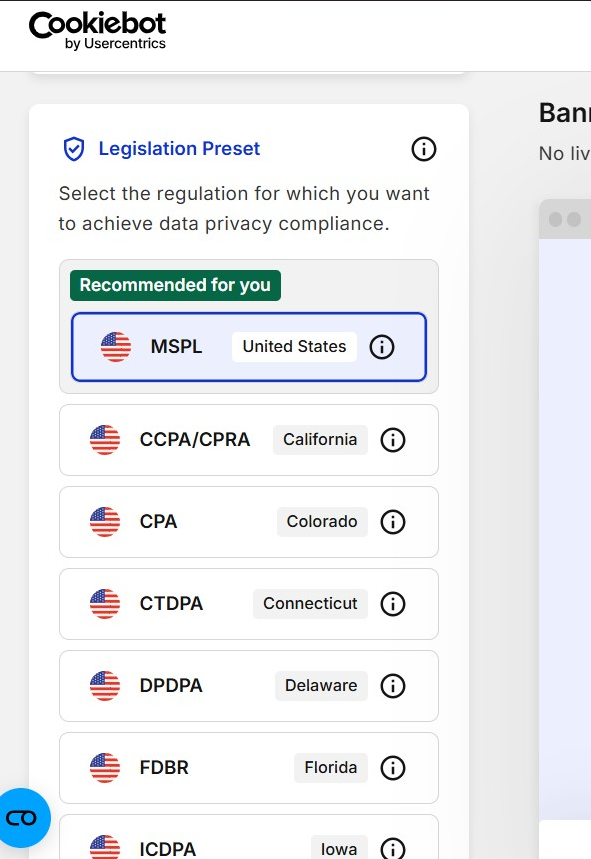
- CCPA, as amended by the California Privacy Rights Act (CPRA), gives Californians the right to access, correct, and delete personal information. It also requires eligible online stores to provide an effective opt-out mechanism and honor applicable opt-out preference signals.
- Privacy laws in Colorado, Connecticut, Virginia, and other US states differ in their rules for targeted-advertising opt-outs, consent, and data access and deletion.
- Canada’s Personal Information Protection and Electronic Documents Act (PIPEDA) covers commercial activities involving personal information, while Alberta, British Columbia, and Quebec have their own private-sector privacy laws.
If you serve multiple locations, a single global privacy setup can fail because jurisdictions may treat the same activity differently. Consent-heavy models focus on getting permission before specific activities start, while opt-out-heavy models focus on providing and honoring the right to stop certain activities.
These approaches can coexist within the same framework, depending on the activity and type of data involved. For example, consider GDPR and CCPA eCommerce regulations.
In the EU, ePrivacy rules generally require consent before nonessential cookies are set, while GDPR defines the standard that consent must meet. In contrast, an opt-out-heavy model is the CCPA/CPRA rule that gives eligible California consumers the right to opt out of the sale or sharing of personal information.
Consent, cookies, tracking, and measurement
eCommerce analytics tools, practices, and consent policies sit at the intersection of privacy and business growth. Tracking practices that do not respect customers’ privacy choices can create legal risks.
- Tracking pixels and advertising tags. Poorly configured tags can share more customer information than the store’s privacy notice describes, including data that could be linked to an identifiable advertising profile.
- Checkout forms and payment flows. A third-party script may capture checkout information that should be excluded, such as delivery addresses or certain product choices. This can expose customer data to unintended recipients.
- Session recording. Without correctly configured masking and exclusion rules for personally identifiable information (PII), tools that record mouse movements, clicks, and scrolling may capture sensitive fields. Session replay practices have also been challenged under privacy and wiretapping laws.
- Cookie banners and consent. Beyond how banner design influences consent decisions (dark patterns), functionality matters, too. If tracking starts before required consent or continues after a valid opt-out, the site may breach applicable privacy rules and face fines. A consent management platform like Cookiebot prevents this by blocking tags and scripts from firing until valid consent is recorded.
- Email capture and pop-ups. Capturing email addresses without appropriate controls can connect anonymous browsing activity to a named customer. Without a valid legal basis for processing, this can also put you in breach of data privacy regulations.
- Loyalty programs. Some loyalty programs can compile an incredibly invasive customer profile and overexpose it to employees and vendors. Many also offer benefits in exchange for data, an arrangement which requires explanation and justification under regulations like CPRA.
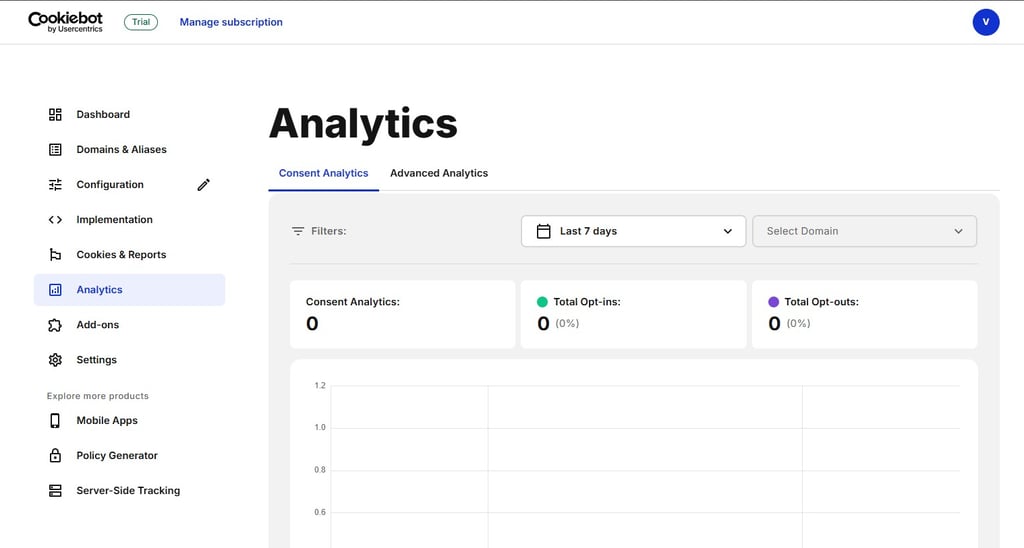
With so many pitfalls to avoid, modern online stores rely on consent management platforms like Cookiebot to help them manage analytics, compliance, and consent.
Third-party apps and vendor risk in the eCommerce stack
Privacy risk in eCommerce often comes from the broader tool stack, not just the storefront itself. The apps your online store uses for reviews, chat, recommendations, shipping, analytics, and marketing introduce third-party JavaScript into the store codebase. They collect, retain, and share data for their own purposes.
If you’re not aware of these third-party apps’ data practices, you likely have an eCommerce privacy compliance gap. On top of that, a malicious hacker can compromise your security by breaking into the website and scraping data you didn’t even know existed.
But that doesn’t mean you have to stop using them. In fact, even removing these plugins from your site won’t make the data they’ve already collected disappear. The solution lies in in-depth audits.
Your team has to maintain an integration inventory and map the flow of customer data between your store and every app, plugin, tracking tool, and embedded third-party service. Review vendor permissions and contracts, and limit API access to reduce risk. Finally, establish deletion requirements and periodically remove unused apps to support privacy and personalization in eCommerce.
Smarter data strategy for privacy-first growth
As access to third-party data becomes more and more restricted, first- and zero-party data become more relevant for data privacy compliance for online stores.
First-party data is information the store collects directly through its own channels, such as browsing activity, purchase history, and account interactions. Zero-party data, on the other hand, is information customers deliberately share, such as product preferences, purchase intentions, and desired email frequency. Both allow you to understand your customers without relying on external tracking. Note that first-party cookies that aren’t strictly necessary still require consent under EU ePrivacy rules.”
Stores can use zero- and first-party data to make recommendations, tailor product suggestions, and send relevant offers to specific customer groups. For instance, an online clothing store can let shoppers choose their preferred fits and styles through site controls, rather than inferring them from browser activity analytics.
This first- and zero-party strategy gives you enough relevant data for personalization without unnecessary data storage, exposure, or management overhead. As long as you remain transparent about what information the store collects, why it needs it, and how it uses it, you’ll keep eCommerce customer trust and meet privacy requirements, while supporting business growth.
Practical steps eCommerce teams can take now
Although there’s no foolproof formula for improving data privacy in eCommerce businesses, a review checklist can push your efforts forward.
- Map data collection and flows. Consider what programs and tracking tools collect data for you and whether each data point serves a clear business purpose. Check where the data goes, how it’s stored, and what third-party apps have access to it.
- Review privacy notices. Ensure your data policies reflect your store’s practices, including collection, sharing, and customer rights. Don’t copy them from other sites and stay away from generic scripts.
- Check eCommerce cookie compliance. Confirm that cookie banners explain all the available choices clearly. Then, check whether tags respect consent requirements for the location as well as whether your marketing and analytics tools comply with opt-outs and withdrawals.
- Go through consent records and deletion workflows. Define how long different categories of customer data should be kept and how they are deleted when no longer needed or when a valid request requires it. Make sure these retention and deletion rules are in force in internal and vendor systems, and the policies are reader-friendly.
- Automate data requests. Create an easy-to-use, automated pipeline that lets customers exercise their data protection rights, such as accessing or deleting collected data.
- Schedule regular reviews. Don’t forget to reassess privacy controls when adding integrations, changing checkout flows, launching campaigns, or expanding into new markets.
- Use a consent management platform (CMP). A CMP can help translate customer privacy choices into consistent website behavior.
Recommended tool for managing eCommerce consent
An eCommerce consent management tool can help bring cookie controls, tracking checks, and consent records into one workflow. For businesses looking for a straightforward option, Cookiebot by Usercentrics is a good choice. It automates cookie scanning, supports consent preference management, and provides consent records and reporting features to help teams monitor their setup. If your store is running on Shopify or WooCommerce, it can integrate directly with the platform simply by installing an app or a plugin.
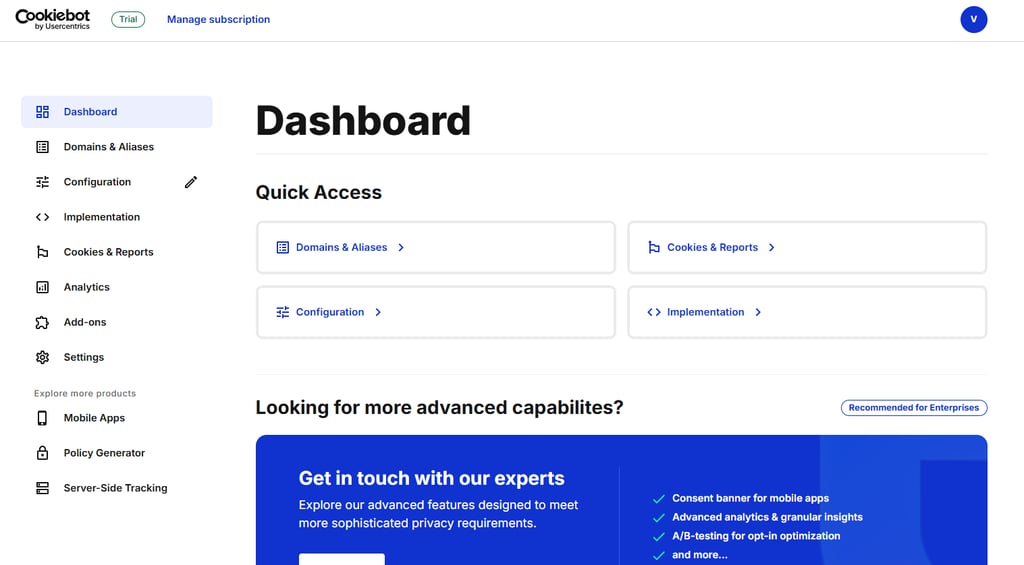
You’ll delegate routine consent management and day-to-day monitoring, while retaining oversight of overall privacy practices and business performance.
Conclusion
Data privacy in eCommerce isn’t a compliance task to tick off before launch, but part of your ongoing business operations. When you handle customer data responsibly, you inspire customer trust, meet legal requirements, and support operational quality and sustainable growth.
So, the focus shouldn’t be on collecting as much data as possible to feed your analytics tools. It’s gathering only the information you need to understand your customer base, personalize their experience, and make informed business decisions. Manage data in line with applicable laws, practice transparency, and respect customers’ rights, and you’ll turn data privacy into a business asset that drives revenue without compromising security.
FAQ
Why is data privacy important in eCommerce?
Data privacy matters for eCommerce businesses because it supports legal compliance and builds customer trust, protecting brand reputation and supporting growth. It ensures security practices such as data minimization, reducing the volume of data exposed in the event of a breach
Can an online store stay compliant without hurting revenue?
Yes, an online store can stay compliant without hurting revenue by collecting only the data it needs, refining its analytics, and narrowing its marketing strategy. As long as it's transparent about these practices, it’ll build trust, drive repeated purchases, and boost revenue.
What is the difference between a cookie banner and real consent management?
A cookie banner is a pop-up that explains the site’s data collection practices and lets customers consent or opt out. A consent management platform (CMP) is the system behind that consent banner that records customers’ choices and ensures tracking technologies follow their preferences.
What kind of customer data should eCommerce brands focus on collecting?
eCommerce brands should focus on collecting first-party and zero-party data that directly reflects customer needs and supports their business goals. This includes browsing activity, purchase history, and customer-provided preferences, which can make personalization and marketing more effective.
How can data privacy improve customer trust?
eCommerce businesses can improve customer trust by clearly explaining how they collect, store, and use personal information. They can also give customers more control through accessible options to view, correct, or delete their data in line with applicable rights.