
Best red light therapy for knee pain: review and buying guide

Knee pain is something we hear about constantly – from heavy-training athletes to elderly people managing aging joint issues and chronic pain. Over the last several years, red light therapy devices have become increasingly sought after online, and many physiotherapy clinics incorporate light-based sessions into their recovery programs now.
Due to its non-invasive approach and promises to ease day-to-day knee discomfort, the interest in RLT is only growing.
In this review, I collaborated with my research team at CoolTechZone to assess the 5 best red light therapy devices for knee pain. We sifted through user feedback, claims, product specifications, and what brands say about their own technology. My goal is to help you find the most reliable, safe, and actually helpful options.
Best red light therapy devices for knee pain – shortlist
- Novaa Light – best RLT device for knee pain
- Novaa Light XL – full-body coverage RLT pad for knees with an extended warranty
- MitoQUAD – premium RLT device to target knee pain with high-density LEDs
- Kineon MOVE+ Pro – targeted laser and LED technology device for joints
- Hooga – affordable red light therapy belt for the knee, back, and waist areas
The best red light therapy devices for knee compared
| Model | Price | LEDs | Wavelengths | Irradiance | Treatment time | Charging | Target areas | Pain concerns | Wireless | Best for |
| Novaa Light | $349.90 | 450 | 850 nm + 660 nm | Around 120 mW / cm² | 15-20 minutes | USB-C | Knees, elbows, shoulders | Joint stiffness, arthritis discomfort | ✅ | Arthritis, chronic knee pain |
| Novaa Light XL | $599.90 | 400 | 850 nm + 660 nm | Around 120 mW / cm² | 10-20 minutes | USB-C | Knees, hips, lower back, legs | Larger-area soreness, post-workout tightness | ✅ | Larger coverage |
| MitoQUAD | $547 | 1215 | 630 nm, 660 nm (red), 810 nm, 850 nm (NIR) | 18mW/cm2 | 10-15 minutes | AC or power bank | Knees, waist, thighs, abdomen | Knee pain | ✅ | Recovery support |
| Kineon MOVE+ Pro | $499 | 72 LEDs and lasers | 660 nm, 808 nm | 80mW per emission area (red light), 50mW per module (infrared) | 5-15 minutes | USB-C | Neck, hip, elbow, shoulder, knee, wrists | Joint pain, back pain, osteoarthritis, shoulder, neck, hip, elbow pain | ✅ | Best for targeted intensity |
| Hooga | $299 | 405 | 660 nm, 850 nm | 70mW/cm² | 15-20 minutes | AC or power bank | Shoulders, hips, knees, abdomen, arms | Joint and muscle pain, muscle recovery | Optional | Budget-focused users |
5 best red light therapy devices for knee – our detailed list
Here are the top 5 red light therapy devices for knee that stood out in my research. You’ll find the top features and what brought them to the top of the list below:
1. Novaa Light – best knee-focused red light therapy device in 2026

| Price | Mid-tier |
| Light sources | Red and near-infrared LEDs |
| Coverage area | Knees, elbows, smaller joints |
| Best for | Targeted knee therapy |
Novaa Light takes the lead as the best red light therapy device for knees overall. It’s perfect if you want a compact pad for your knees. It combines 660 nm and 850 nm wavelengths with an intelligent controller.
It features a wrap design that can be used around the knee, so it’s practical for short daily sessions. Compared to larger pads, this one positions and stores more easily, especially if you want something simple for use on the joints.
2. Novaa Light XL – wide-coverage RLT pad for knees with extended protection
| Price | Higher mid-tier |
| Light sources | Red and near-infrared LEDs |
| Coverage area | Knees, thighs, hips, lower back |
| Best for | Larger coverage therapy |
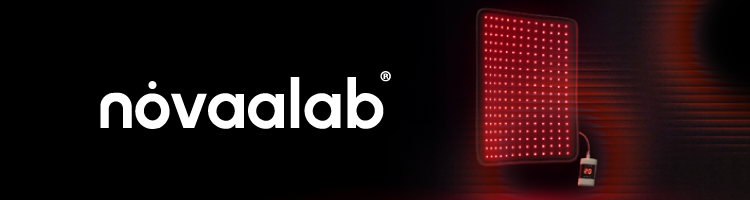
Another RLT device by Novaalab, Novaa Light XL, made it to my list as a larger RLT pad that can be used for the thighs or lower back, not only knees. It uses a combination of 660 nm and 850 nm wavelengths and features a soft, flexible material that molds well to your body.
While it’s on the pricier side, Novaa Light XL offers a 60-day money-back guarantee and a warranty of up to 3 years.
3. MitoQUAD – high-density LED red light device for knee discomfort

| Price | Premium |
| Light sources | Quad-wavelength LEDs (red and near-infrared) |
| Coverage area | Knees, thighs, hips |
| Best for | Focused coverage on knees and surrounding joints |
The MitoQUAD is one of the more premium options I reviewed, mainly because it has a multi-wavelength blend and high LED density. It’s a targeted belt to be used for knees, thighs, and hips. It employs TriChip™ Technology, which allows higher light density and multiple wavelengths.
Its wider coverage is also great for surrounding muscles or tendons, which tend to get tight after workouts or daily strain. However, it’s one of the priciest RLT devices on my list.
4. Kineon MOVE+ Pro – precision LED-laser system built for joint support

| Price | Premium |
| Light sources | LEDs, targeted medical-grade lasers |
| Coverage area | Knees (modular panels wrap around the joint) |
| Best for | Targeted, high-intensity RLT |
Kineon MOVE+ Pro landed on my top list, as it’s the most precision-focused device I reviewed and takes another approach than most RLT pads for the knee.
According to the brand, it combines red light LEDs with near-infrared low-level lasers for a more concentrated approach to joint issues. Its modular panels clip around the knee, directing light where you typically feel stiffness or strain. The MOVE+ Pro also uses high irradiance levels, although the higher intensity comes at a steeper price.
5. Hooga – budget-friendly red light therapy belt for knees, back, and waist

| Price | Budget |
| Light sources | Red, near-infrared LEDs |
| Coverage area | Knees, lower back, waist, thighs |
| Best for | Budget-focused users |
The Hooga red light therapy belt is the most affordable RLT device for knees on my list. Visually, it’s the model that most resembles the MitoQUAD belt, just with a simpler build and lower-intensity output.
It uses 660 nm and 850 nm LEDs and wraps comfortably around the knee or other lower-body areas. It’s compatible with both outlets and power banks. The only downside I noticed was that its intensity is lower than that of other premium belts, but it’s nonetheless great for quick daily sessions.
Our methodology
To select the best red light therapy devices for knees, I focused on a structured research process built around user experiences, scientific insights, and detailed product specifications.
Together with the CoolTechZone research team, we compared what real users report against what the technology is designed to deliver:
- Pain relief potential (30%). We based our decision on research data, user feedback, and the red/infrared wavelength ranges used.
- Device design and comfort (20%). We wanted to see how well the products were built. We evaluated how the device fits around the knee, the materials used, and day-to-day wearability (user-based).
- Safety and certifications (20%). Another really important point was whether the device is certified. For that, we checked for FDA-clearance, LED quality, and certificates for adherence to safety standards.
- Ease of use (15%). We also evaluated the device’s portability, setup, and ease of use.
- Value for money (15%). I selected various device options on the budget scale (from budget-friendly to premium options). We also evaluated the overall value for money, warranty options, and money-back guarantees.
What is red light therapy?
Red light therapy (RLT) is a non-invasive light therapy that uses low-level red and near-infrared wavelengths that may have an impact on the cellular function. In simpler terms, as I found, one of the mechanisms of how RLT could have health effects is the fact that these wavelengths might interact with the part of the cell that's in charge of energy, potentially giving cellular activity a little boost.
You'll more often find RLT being applied in dermatology clinics for cosmetic purposes, such as potentially improving skin texture, softening fine lines, and encouraging collagen production.
Unlike some skincare treatments, red light therapy works with light only and does not use any heat or chemicals. The sessions are generally painless, and the light is less likely to damage the skin barrier in comparison to chemical treatments. Although research is still in progress, many people use RLT for potential joint and skin improvements, as well as other wellness aspects.
How does red light therapy work for knee pain?
According to preliminary research, red and near-infrared wavelengths may stimulate cellular activity, which may influence overall knee tissue function. l. Changes in local blood flow could be one of the potential mechanisms that support recovery, whereas past studies have shown that incorporating light therapy with a special exercise program may lead to the reduction of pain intensity in people with knee osteoarthritis.
When using the device regularly, many users reported feeling less stiffness in the knee area or experiencing smoother movement, though this should be taken with a grain of salt. Results can differ person by person based on the knee condition, range of wavelength, and frequency of use of the device.
As evidence on its potential health effects is still emerging, RLT shouldn’t be used as the only line of treatment – so if you experience any type of pain, seek diagnosis and adequate treatment recommendations from a healthcare professional first and consult whether red light therapy could be used as an additional method.
Benefits of red light therapy for knee pain
Here are five potential benefits of red light therapy for knee pain, based on emerging research:
- May reduce inflammation and swelling. Some research using LLLT has shown decreases in inflammatory markers in joint tissue.
- May ease pain and stiffness in joints. According to research involving models of osteoarthritis, light therapy resulted in improved joint mobility and perceived stiffness.
- Might support recovery from injuries or surgery. Red and near-infrared wavelengths could potentially improve joint function during recovery, though evidence is still limited.
While devices claim these benefits, users I reviewed emphasized that consistent session frequency and proper device placement made the biggest difference, not just higher intensity or bigger pads.
While results of some RLT studies do show some promise, it’s important to note that the full effectiveness of red light therapy has yet to be established.
Key features to look for in a red light therapy device for pain
From my research, a few features consistently stood out as the ones that matter most for red light therapy for knee pain:
- Wavelength range. Prioritize RLT devices with 660 nm (red) and 850 nm (near-infrared) wavelengths. This combination is often mentioned in studies for application to both superficial tissues and deep structures.
- Power output. The amount of light that actually falls on the knee, measured in mW/cm². Higher values generally translate to stronger light delivery.
- Coverage area. A wrap or pad should completely cover the front and sides of the knee so that the light is not focused on just one point.
- Portability. Wrap-style belts are easier to use at home, while larger panels may require a setup space.
- Timer settings. Look for automatic shut-off and adjustable timers for consistency in sessions.
- Material and comfort. Neoprene, soft polyester blends, and elastic compression fabrics are materials that are comfortable for daily use.
Can I use red light therapy after knee surgery?
What I have gathered through my research is that red light therapy is sometimes employed during post-surgery recovery, but it's an area in which caution is very much called for.
In LED devices, visible red light interacts mostly just with the surface of the skin, while near-infrared wavelengths reach a little deeper into muscles and joints. Early studies discuss their potential use to support general comfort while recovering, but the evidence is still very limited and very individual.
Some user experiences I’ve reviewed online are about how recovery timelines differ – some reach for light therapy weeks post-surgery, others far later.. If you're considering it, the safest way to go about it is simply to inquire with your physician if light-based devices are right for you at your stage of healing.
How to incorporate red light therapy into your knee pain management routine
After wading through hundreds of user reports and device guidelines, one clear takeaway is that red light therapy works best when it's a routine, not a one-time experiment. I outlined a few practical tips to build into your knee-care routine:
- Set up comfortably. Position the RLT device so that it can sit or lie directly against your knee without slipping.
- Observe the timing requirements. Follow the instructions provided by a manufacturer regarding how long your sessions should be. Always ask advice from your doctor or physiotherapist if in doubt.
- Pair RLT with gentle movement. Walking, cycling, or gentle stretching may elevate the RLT benefits and maintain joint mobility.
- Maintain reasonable expectations. Instead of describing instant improvements, most users describe gradual changes, so be patient and consistent.
- Prioritize consistency over intensity. Sessions that are short (10-20 minutes) and frequent (2-3 times per week) might be better than long and infrequent ones. That said, it’s unknown for how often, for how long and at what intensity and wavelengths should red light be applied for successfully targeting various ailments.
- Fit it into your routine. It could be part of an evening wind-down, post-workout cool-down, or morning mobility.
Precautions doctors recommend if you want to use red light therapy at home
Red light therapy is generally safe, according to the majority of recent dermatological research and sources, but there are a few useful safety precautions that should be noted. The American Academy of Dermatology states that it's important to start out slowly because shorter sessions allow you to gauge how your skin will respond before lengthening them.
Also, there's still no general consensus on whether red light can be harmful to the eyes or not,, you should avoid directly exposing your eyes and wear goggles while using RLT devices. Additionally, RLT shouldn’t be used if you have open wounds, active infections, or irritated skin. It's advisable to stop and speak to your doctor if you experience redness or discomfort during or after a session.
Additionally, doctors may recommend using devices with validated safety certifications (such as FDA clearance) and closely adhering to the manufacturer's instructions rather than improvising with session times.
Long or extremely frequent sessions might be less effective than regular, moderate use. Intensity is not nearly as beneficial as a consistent routine.
Final verdict: the best red light therapy for knee
Overall, having compared features, user experiences, and how practical each device is for daily use, it was clear to me that devices that are easy to wear and forget about like the Novaa Light or Kineon MOVE+ Pro, tend to deliver the most consistent routines. Larger pads make more sense if your discomfort extends beyond the knee.
However, the best red light therapy for knee pain, according to my research, is the one that suits your lifestyle and consistency, not the one with the highest price tag.
FAQ
What wavelength of red light therapy device is best for relieving knee pain?
Most sources point out that the most commonly used wavelengths for knee discomfort are a combination of 660 nm (red) and 850 nm (near-infrared), as they target both surface tissues and deeper structures. However, it’s unknown at what intensity and wavelengths should red light be applied for successfully targeting knee pain.
How often should I use red light therapy for knee pain?
With at-home red light therapy devices, you should aim for around 15-30 minutes per session, two or three times a week. However, each manufacturer has different recommendations, according to the device and its specifications – ask your healthcare provider for personalized guidance.
Is red light therapy safe for people with arthritis?
RLT is thought to be generally safe in the short term. Research suggests that it may be safe for arthritis patients, but responses vary. However, it shouldn’t be used as a sole treatment option.
Can I use red light therapy after knee surgery?
It depends. Sometimes it can be explored during recovery. Always check with your healthcare provider whether light-based devices are suitable for your stage of healing before adding them to your routine.
Does red light therapy really work for chronic knee pain?
Research is still limited and has shoon mixed results. Some users report reduced stiffness with consistent use, although results vary depending on the device's quality, frequency of use, and underlying condition.





Your email address will not be published. Required fields are marked