Best VPNs for China 2026

Most people know that China heavily restricts many Western online services, including Google, Facebook, and Wikipedia. This might come across as quite a shock if you’re visiting the country and want to use the web like you’re used to. Thankfully, you can still do that if you have a powerful VPN at your disposal.
I traveled to China for a couple of months to test some of the most popular VPN services available to see which can actually bypass the country’s Great Firewall. In my experience, eight providers stood out as the best options, and there were even a handful of free services that worked reasonably well. So, read on to see which VPNs are best for China.
Top VPNs for China – shortlist
- NordVPN: The best VPN for China, with its numerous features that can bypass the Great Firewall.
- Surfshark: My go-to VPN if I wanted to affordably unblock the Chinese Firewall on unlimited devices.
- ExpressVPN: A pricey but very reliable VPN for bypassing the Great Firewall smoothly.
- Proton VPN: Privacy-focused VPN with a free tier that works in restricted environments
- Astrill VPN: A local favorite with strong obfuscation.
How to use a VPN for China: quick guide

If you want to use a VPN in China, you’ll have to install it on your device in advance. The country heavily restricts most VPN software, including its websites and download pages on various app stores. That means you’ll have a hard time downloading a VPN once you’re already in China. So, here’s what you need to do before visiting China:
- Choose a VPN service that has a history of working in China. I recommend NordVPN, currently 75% OFF
- Download and install the VPN app on your device
- Open the app and sign in with your account
- Connect to any server outside of China to unblock your usual online content
Why do you need a VPN in China?
If you’re unaware, China is a totalitarian state that utilizes online surveillance and censorship to keep its citizens in line. This means that online services that want to operate in the country must cooperate with the government and collect various user data on its behalf. Otherwise, the service is blocked. That’s why many services that you’re used to using abroad are unavailable in China. Instead, there are plenty of local alternatives that the government approves.
China enforces these widespread online restrictions with what is known as the Great Firewall of China. Basically, it’s a set of network rules that monitor and block online traffic to services that aren’t approved by the state. It’s a sophisticated technology that is constantly updated to ensure nothing gets past it. Even most VPNs struggle with it, which is why I had to test them myself to find out which ones are the best.
As you can imagine, a good VPN for China allows you to access online services that are normally unavailable in the country. This includes almost everything that you’re used to using elsewhere, such as Google, Facebook, ChatGPT, Netflix, Wikipedia, and so much more. You’ll also be safe when using public Wi-Fi, and your online activities will be completely confidential. So, I think it’s clear why you need a VPN in China.
How we tested China VPNs
In order to evaluate various VPNs in China, I had to install them on my test devices before visiting the country. That means I had to briefly evaluate the list of possible options beforehand so I knew which ones had the most potential. I cover each step of the testing process in more detail below.
Step 1. Choose the VPNs for testing
The first step was choosing a list of VPNs for testing in China. I couldn’t just pick the providers at random, and I had to keep the list relatively short since it’s unrealistic to test tens of VPNs all by myself. As such, I picked some of the best VPNs available that, at first glance, offer the necessary tools for dealing with the Great Firewall.
More precisely, the potential VPNs needed to have features like:
- Multiple tunneling protocols
- Obfuscation features
- Many servers worldwide
- Strict no-logs policy
- Privacy-friendly jurisdiction
I took other things into account as well, but the above things are the most important factors I reviewed. Overall, I picked 15 VPNs for testing in China.
Step 2. Installing the VPNs
Once the VPN list was finalized, all I had to do was install all of them on my testing devices. I took a Windows laptop and my Android smartphone on my business trip to Shanghai, both of which I will use for personal needs and for testing. My ISP of choice was China Telecom since it’s the most popular provider. Note that the ease of the installation process was also a minor part of the overall evaluation.
Step 3. Hands-on testing in China
Once I was in China, it was time to start testing the VPNs and their ability to bypass the Great Firewall. I tested each VPN separately and scored in various areas, so it'd be easier for me to create the final ranking. Naturally, I mainly focused on the areas that have the most impact on your experience in China and similar countries. In my opinion, those things are:
- Obfuscation features. The only way to bypass the Great Firewall of China is with powerful obfuscation features that mask your VPN traffic. Not only that, it’s crucial that a good VPN for China offers multiple tools for this task since it’s unlikely that one feature will work all the time.
- Privacy features. Besides obfuscation, the VPN must come with other tools that guarantee your confidentiality in normal situations. That means it should use strong encryption, have a kill switch, and adhere to a no-logs policy.
- Connection speed. There’s no point in using a VPN in China if it slows down your internet connections to a halt. That’s why a worthwhile VPN should come with a widespread server network and modern tunneling protocols – the key components of fast connections anywhere.
- Device compatibility. A worthwhile VPN for China must include dedicated apps for various devices so you’d have an easy time installing the software. It should also be easy to use, enabling you to bypass the Great Firewall without hassle.
- Price. I think it’s fair to say that a VPN for China should offer an excellent balance between price and performance. Also, the subscription terms should be fair and provide reasonable options to test or refund the service.
I thoroughly tested each criterion in its respective situation to get a good understanding of each VPN’s performance.
Step 4. Final provider selection and ranking
Once testing was completed, it was time to choose the final list of recommended VPN providers and to rank them appropriately. I carefully evaluated all the findings from the tests and ranked the providers in a way that I felt best represented my overall experience in China. That means that the top providers gave the best overall user experience while I was using them, even if they weren’t perfect in one area or another.
Best VPNs that work in China 2025: detailed list
Normally, I would work alongside our research team to evaluate and compare VPN services. However, this time, I had to travel by myself to China to test the VPNs and see whether they could actually perform in the right circumstances.
The recommendations below reflect my most recent research from my trip to Shanghai, China. I analyzed each VPN in terms of security features, connection speeds, pricing, and overall usability, to see which services excel. Read on to discover which VPN might be the right fit for your needs.
1. NordVPN – overall best unblocking and streaming in China
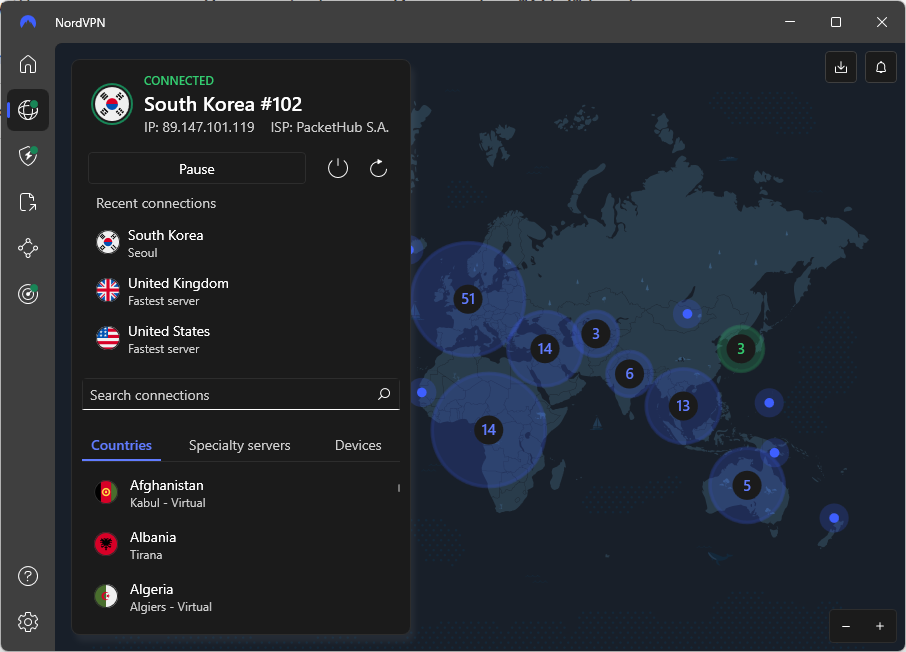
Out of all the VPNs I tested during my time in China, NordVPN proved to be the most reliable. Its connections were stable, allowing me to freely stream any worldwide content I wanted. Plus, it protected my privacy every step of the way.
Bypassing the Chinese firewall. When I arrived in China, I quickly realized just how strict the Great Firewall really is. Google, YouTube, WhatsApp, and countless other services were completely blocked. I tested NordVPN as soon as I could, and it worked reliably. Its obfuscated servers disguised my VPN traffic as normal HTTPS browsing, which let me slip past the firewall without detection. What impressed me most was the consistency, even after switching locations or reconnecting at different times of day, NordVPN kept me online and gave me stable access to sites and apps that were otherwise off-limits.
Speed and streaming. When I tested NordVPN in China, I connected to a South Korean server to check performance. Running a speed test from Shanghai to Seoul, I recorded download speeds of 240Mbps, upload speeds of 179Mbps, and a latency of 22ms. These results were more than enough for everyday browsing and smooth streaming. Netflix and YouTube loaded quickly, and I was able to watch videos in 4K without noticeable buffering. I didn’t experience any major jitters or stuttering, even during longer viewing sessions, and switching between servers was quick and seamless. Overall, NordVPN handled high-quality streaming inside China impressively well.
Server locations. NordVPN has one of the largest server networks on the list with 9,200+ servers in 137 countries. During my stay, I rotated between servers in Hong Kong, Japan, and South Korea. The nearby servers gave me the fastest and most stable connections, but I also had no problem accessing US and UK servers to check my subscriptions back home. Having thousands of servers worldwide made it easy to switch when I needed to.
Privacy and security. I paid close attention to security. With NordVPN, I felt safe knowing that my connection was encrypted with AES-256 and that the kill switch would cut the internet if the VPN dropped. I also ran DNS leak tests, and NordVPN passed every one. Its no-logs policy – already audited – gave me peace of mind that my data wasn’t being tracked.
Ease of use. NordVPN’s apps are straightforward and intuitive, which allowed me to easily utilize its full potential while staying in China. All of its features are easy to find using their unique labels and icons. I especially liked the world map, which allowed me to easily find nearby servers for optimal connections.
Pricing and value. After using NordVPN daily in China, I found it worth every penny. The long-term plans are affordable (starting at $3.49/month), and the 30-day money-back guarantee gave me confidence when I first signed up. Given the speed, stability, and privacy I experienced, NordVPN delivers excellent value.
2. Surfshark – budget-friendly VPN with obfuscation tools and extra security features
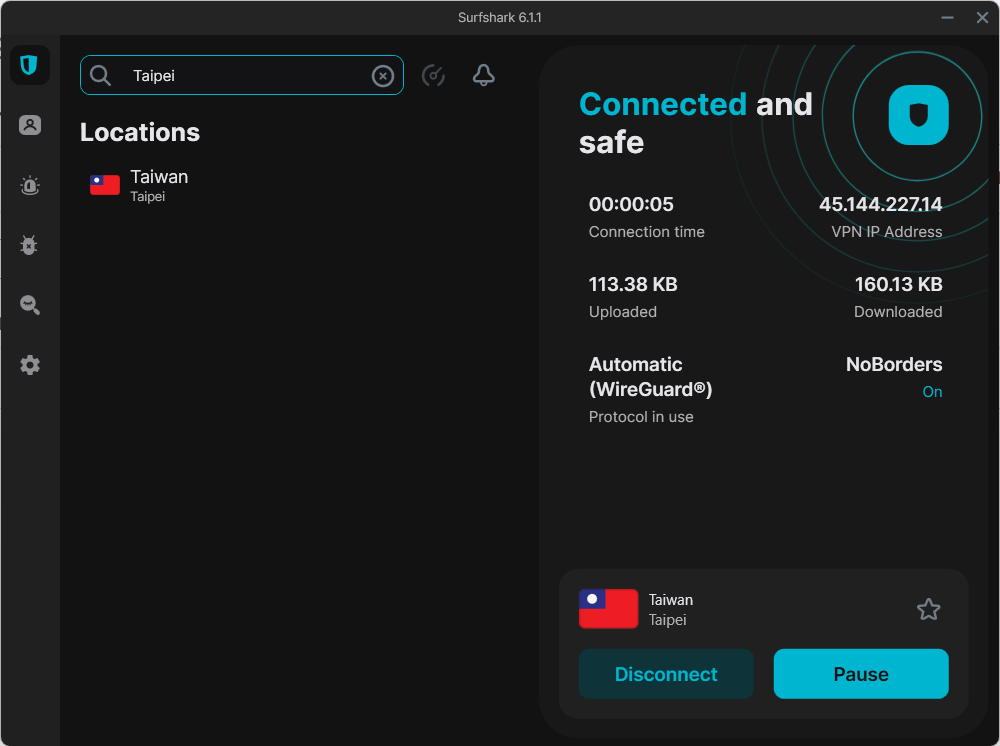
If you’re looking to travel to China on a budget, then I recommend Surfshark as your go-to VPN for bypassing the Great Firewall. It’s cheaper than NordVPN yet its overall performance isn’t that far behind.
Bypassing the Chinese firewall. I was worried at first whether Surfshark would work in China because it only offers one feature (NoBorders mode) for dealing with online censorship. Luckily, it worked pretty well during my tests, but I was a bit at a loss in those rare situations when it didn’t work. After all, NordVPN has multiple features for tackling censorship, allowing me to cycle between them as needed. Meanwhile, with Surfshark, all I could do was reconnect and hope for the best. Still, the results were very good and the connections were stable.
Speed and streaming. I used Surfshark’s servers in Taiwan while I was visiting China. What stood out for me is that this provider showed some of the best download speed retention results of all the VPNs I tested, even outpacing NordVPN by a small margin. To be precise, my download speed with Surfshark was 242Mbps, while upload speed was lower at 40Mbps. Plus, ping was a solid 34ms. Unsurprisingly, these excellent connection speeds allowed me to stream high-quality video content without trouble.
Server locations. Surfshark offers 4,500+ servers across 100 countries, which is a solid network overall, but the server numbers are relatively lower than with some other providers. I typically connected to servers in Taiwan, Hong Kong, and Japan, although there are plenty of other options in Asia. I’m especially glad that there are multiple Static IP servers in Japan and Singapore.
Privacy and security. Aside from the essentials like the kill switch and DNS leak protection, Surfshark includes outstanding extras for improving your security and privacy in China. The most noteworthy inclusion is Alternative ID, which allowed me to easily create substitute personal details when filling in various online forms. There’s even a robust antivirus available if you’re worried about malicious software.
Ease of use. Surfshark's minimalistic interface took some getting used to. I was a bit disappointed by the lack of a world map like the one NordVPN has. It would have made it easier to find nearby countries to connect to for optimal speeds. Without it, I had to rely on my own geographical knowledge, which isn’t that great to be honest. Besides that though, everything is easy to find.
Pricing and value. Surfshark offers excellent value for money at extremely affordable prices that start at $2.49/month. You’ll have to pay more if you want bonus security features like Antivirus and Alternative ID, but I think those tools are extremely valuable in China. Moreover, the provider has a generous 7-day free trial available on mobile app stores, or you can use the 30-day money-back guarantee to test it.
3. ExpressVPN – effective VPN that can bypass the Great Firewall without trouble
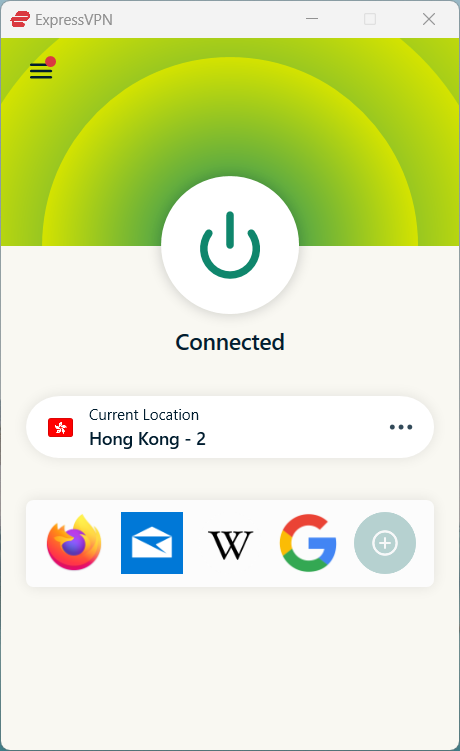
Although ExpressVPN is one of the pricier VPNs I’ve tested, the results it delivered justified the increased price. It’s also great in other areas, although there are some considerations as well.
Bypassing the Chinese firewall. ExpressVPN made it especially easy to bypass the Great Firewall of China. All I had to do was pick the Automatic tunneling protocol and the app did the rest in the background. It worked well in most cases, with only a handful of instances where it couldn’t unblock my desired services.
Speed and streaming. I evaluated ExpressVPN’s connection speeds using a nearby server in Hong Kong. The results were excellent, and the provider stood out by having the highest upload speed retention rates of all the tested VPNs. With ExpressVPN, the download speed was 193Mbps, the upload speed was 239Mbps, and ping was 36ms. Crucially, ExpressVPN achieved these results with its proprietary Lightway protocol. All of these aspects made it very easy for me to unblock any streaming content I wanted.
Server locations. One of my main issues with ExpressVPN is that it doesn’t disclose how many servers it actually has in its network. It only states the number of countries, which is 105. The country coverage is definitely great, but I don’t understand why the service doesn’t say how many servers it has when other providers do.
Privacy and security. ExpressVPN comes with a few extra features that many other VPNs don’t include by default. For example, it includes a password manager, allowing you to create strong passwords for your accounts more easily. It also effectively blocks ads and trackers to improve your overall browsing experience. Most importantly, the service was audited more than 20 times by independent parties, which should convince anyone that this service is reliable.
Ease of use. ExpressVPN’s app interface is very minimalistic, even more so than Surfshark’s. This can make it harder to use at least initially. However, since there’s no need to enable any special features to bypass the Great Firewall, you can just connect to a nearby server and use the VPN without hassle. Another potential nitpick is the lack of a world map for easier server selection.
Pricing and value. ExpressVPN pricing starts at $2.99/month, with its effectiveness and versatility making it a worthwhile investment, even with no money-back guarantee.
4. Proton VPN – privacy-oriented VPN for China that can bypass any restrictions
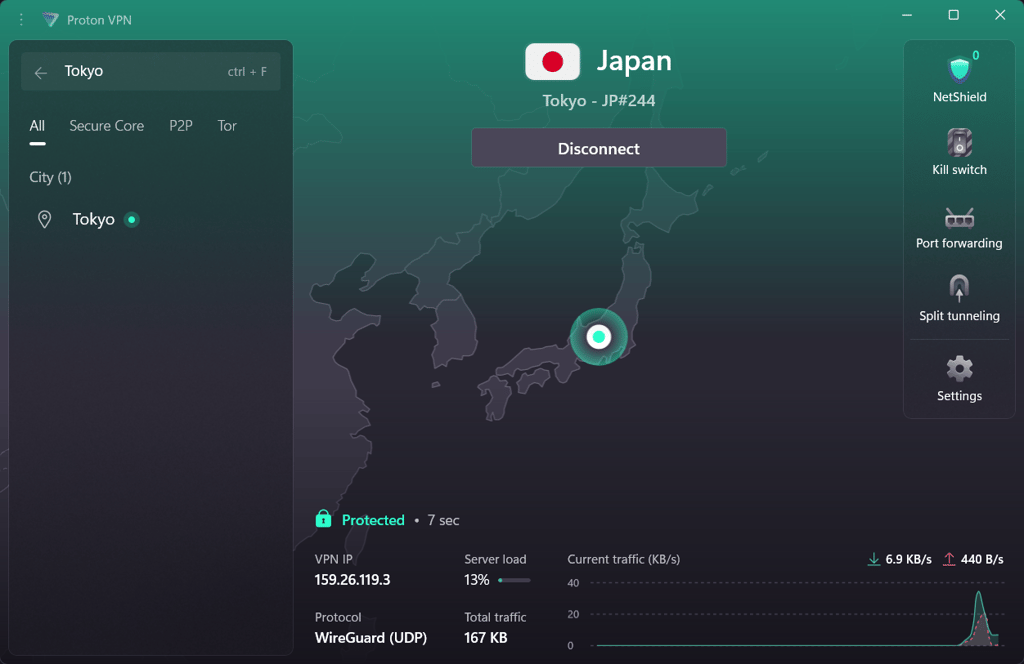
The most dedicated online privacy enthusiasts should look no further than Proton VPN. This famous VPN is audited, based in Switzerland, and open-source, all of which are green flags in terms of online privacy. The VPN works well in other areas too, although that comes with the caveat of a heftier price tag.
Bypassing the Chinese firewall. Like NordVPN, Proton VPN has quite a selection of tools for dealing with the Great Firewall of China. For example, server categories for this task include Secure Core and Tor servers. Alternatively, you can enable the Stealth protocol if the servers don’t work for you. All these tools worked brilliantly during my tests in China, making Proton VPN an excellent choice.
Speed and streaming. Proton VPN uses WireGuard as its fastest tunneling protocol, just like Surfshark. I tested it by connecting to servers in Japan, and the results were extraordinary. It had the best download speed retention rates of all the VPNs I tested in China. So, my download speed was 283Mbps, the upload speed was 218Mbps, and ping was 35ms. It should come as no surprise that such connections were more than enough for lag-free streaming, gaming, and web browsing.
Server locations. Proton VPN has one of the most expansive VPN server networks I’ve ever seen. It boasts an impressive 19,500+ servers across 145 countries, which also includes a good array of specialty server categories. Besides the aforementioned Secure Core and Tor servers, you also have servers for streaming and P2P.
Privacy and security. This VPN has almost no rivals in the privacy department. The most noteworthy perk is its open-source software, which greatly enhances the provider’s overall reliability and trustworthiness. Then there’s the Swiss jurisdiction, which guarantees that your data will not make its way to foreign adversaries. If that wasn’t enough, Proton VPN’s no-logs policy was audited multiple times. Naturally, there’s also no shortage of effective security features to keep you well protected from cyberthreats.
Ease of use. Proton VPN has redesigned its user interface fairly recently, which is a noticeable improvement over its previous iterations. It’s pretty intuitive and easy to use like before, thanks to its inclusion of a world map for navigation. The animations while you interact are pretty smooth, which makes using Proton VPN a great experience.
Pricing and value. At $2.99/month, Proton VPN is more expensive than many other VPNs on this list. Still, considering its massive server fleet, speeds, and effectiveness in China, it’s an excellent choice. There’s even a free tier you can try, but its lack of features makes it rather underwhelming in my opinion.
5. Astrill VPN – a reliable VPN for China that’s favored by locals
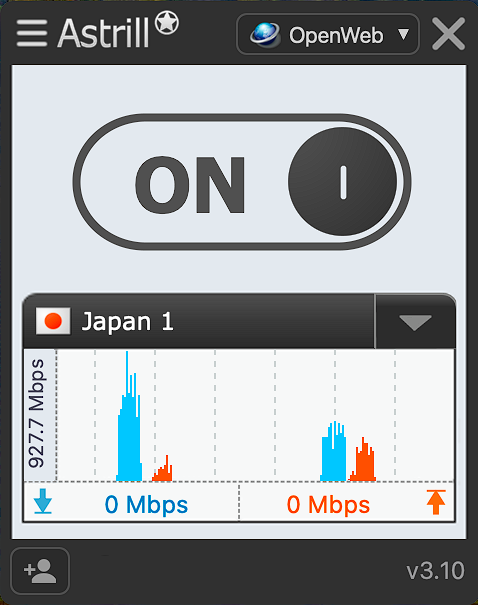
Astrill VPN is a reliable service that comes with many recommendations from local residents. It consistently evades the Great Firewall of China with its proprietary protocols that are designed specifically for this task. Unfortunately, the provider’s fixation on this scenario makes it rather limited in other areas.
Bypassing the Chinese firewall. I had high expectations from Astrill VPN since it is so highly regarded by everyone for its ability to bypass Chinese censorship. Thankfully, the VPN was indeed great at bypassing the various network restrictions I encountered in China. Plus, I could choose between OpenWeb and StealthVPN protocols as needed if one or the other didn’t work.
Speed and streaming. Astrill VPN was pretty fast during my speed evaluations in China. I tested it with its servers in Japan and it was almost as fast as NordVPN and Surfshark. More precisely, my download speed was 232Mbps, the upload speed was 170Mbps, and the ping was 30ms. This is excellent news if you want to stream UHD video content, except that Astrill VPN isn’t great when it comes to unblocking streaming platforms beyond Netflix.
Server locations. Like ExpressVPN and PIA, Astrill VPN doesn’t clearly state how many servers it has in its fleet. It only says that it has servers in 119 cities across 57 countries. Honestly, this isn’t particularly impressive, but at least there are options near China, such as Hong Kong, Taiwan, and Singapore.
Privacy and security. Astrill VPN wouldn’t be so highly regarded if it wasn’t secure. It runs on robust AES-256 encryption, offers a kill switch, and has effective DNS leak protection. Naturally, its main attraction is the multitude of security-focused tunneling protocols, such as WireGuard, StealthVPN, and OpenWeb. Meanwhile, you can rest assured that your data is kept properly because the provider is based in the privacy-friendly Seychelles. However, the provider’s no-logs policy wasn’t audited last time I checked.
Ease of use. Astrill VPN is functional, but I think its user interface might not be to everyone’s tastes. The software looks pretty outdated visually, especially when compared to other VPNs I’ve tested. Still, I don’t think that’s a huge issue if your only goal is to bypass the Great Firewall of China.
Pricing and value. Astrill VPN’s main drawback is its price tag, which begins at $12.50/month. It is the most expensive VPN on this list and its lowest price is still around three times more than with the competition. While some could argue that the price is justified, I think it’s a bit too much, especially considering that the VPN isn’t great for streaming and doesn’t disclose its server numbers.
6. Private VPN – well-priced option for streaming in China
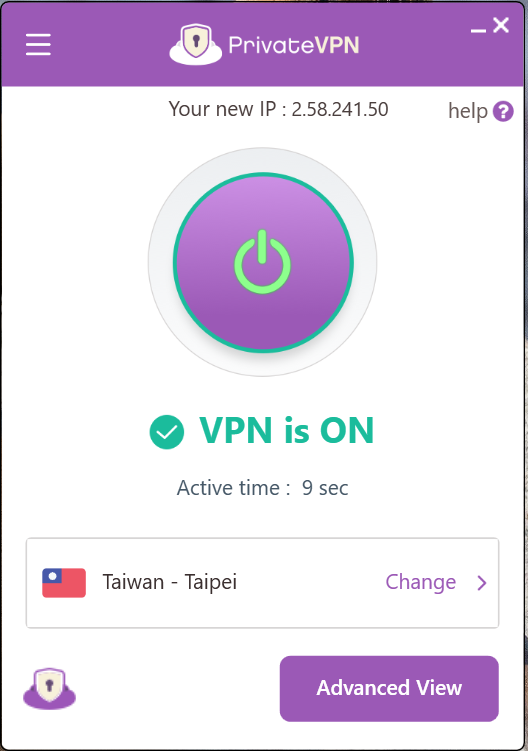
PrivateVPN is another budget-friendly VPN for China that can bypass the Great Firewall and unblock geo-restricted content. It’s a lesser-known VPN in the industry, making it an ideal option for staying undetected.
Bypassing the Chinese firewall. I thought PrivateVPN would underperform in this area with its tiny server network, but I was actually pretty surprised with its effectiveness. While it wasn’t as good as, say, NordVPN and AstrillVPN, it was quite good and actually better than PIA. All I had to do was configure the app to use the StealthVPN protocol. It worked well enough for occasional browsing.
Speed and streaming. PrivateVPN really dropped the ball in the connection speed category. During my speed evaluation with its server in Taiwan, my download speed was 18Mbps, upload speed was 20Mbps, while ping was 24ms. These are abysmal results that make it difficult to stream content in HD without lagging. This might be a one-off issue, but I doubt that PrivateVPN can do any better with its tiny server network.
Server locations. PrivateVPN claims to have over 200 servers in 63 countries. While I commend the service for its honesty, the unfortunate truth is that this is one of the smallest server networks of any VPN provider I’ve evaluated over the years. Thankfully, there are plenty of options across Asia, including in Hong Kong, Taiwan, and Singapore.
Privacy and security. PrivateVPN is pretty good in the security and privacy department, albeit a bit lacking in terms of extra features. It has all the essentials like a kill switch, strong encryption, and DNS leak protection, but not much else. For example, I would like it if PrivateVPN had an ad and tracker blocker. Moreover, the service is based in Sweden, which is part of the Fourteen Eyes alliance. There’s also no independent audit that would confirm its no-logging promises.
Ease of use. The PrivateVPN app is simple and straightforward, making it easy to use. Since there aren’t that many features available, there’s no risk of getting lost or overwhelmed while using the service.
Pricing and value. PrivateVPN is pretty cheap with its $2.00/month starting price, which makes sense since it’s simple and offers few features. It was reasonably effective at bypassing the Great Firewall, which is arguably all you really need from a VPN for China. Unfortunately, the service was quite slow during my tests, making it hard to recommend if you want to stream Western video content in China.
7. PureVPN – well-rounded VPN for China with many servers and dedicated IP options
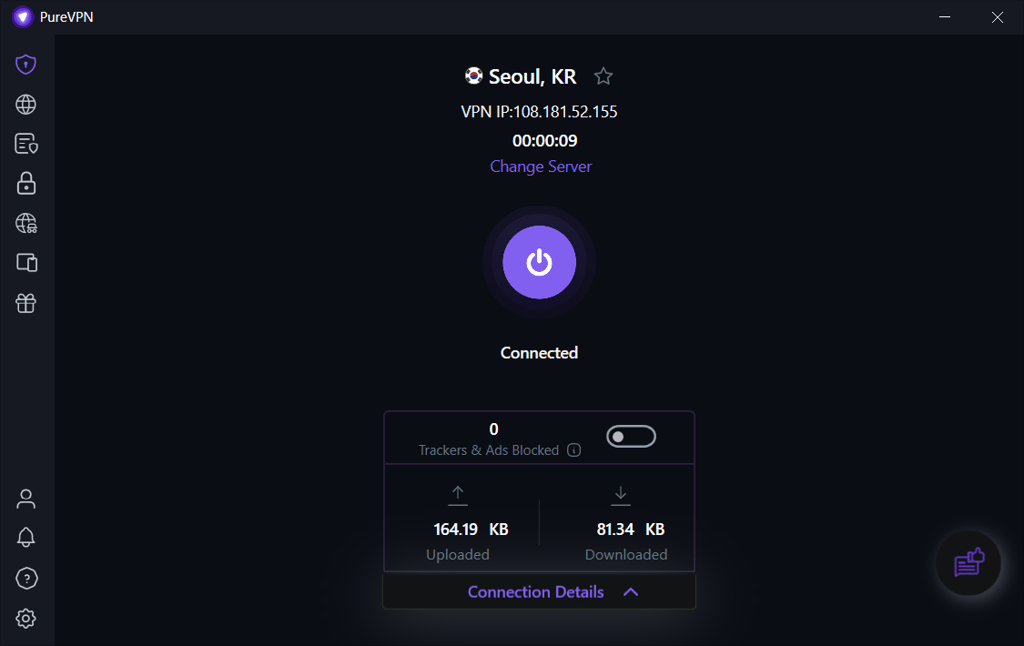
PureVPN is a well-rounded VPN for China that can bypass the country’s Great Firewall relatively easily. It has low starting prices yet also offers more expensive subscriptions if you want greater online protection.
Bypassing the Chinese firewall. PureVPN was pretty good at bypassing the Great Firewall of China. I couldn’t find any specific features for this task, but the VPN worked rather decently even without them. I had some issues occasionally, but nothing particularly frustrating. Overall, it was average, but not bad.
Speed and streaming. Like PrivateVPN, PureVPN severely underperformed in the connection speed test while I was in China. I tested the service’s servers in Korea, and its download speed was 61Mbps, the upload speed was 81Mbps, and ping was quite high at 113ms. Technically, you can still stream UHD content with such results, but note that PureVPN might have a more noticeable impact on connection speed if you have a low baseline connection speed.
Server locations. PureVPN offers a decent spread of 6,000+ servers across 65 countries. The server numbers are greater than what Surfshark and PrivateVPN offer, but the country variety is a bit underwhelming. Thankfully, there are options in Asia that should, in theory, lead to better connection performance in most cases.
Privacy and security. PureVPN offers good overall security and you’ll get even better results if you pick a pricier subscription tier. As expected, the cheapest plan includes a kill switch, DNS leak protection, and robust encryption. Crucially, the VPN is based in the British Virgin Islands, a country with a good attitude towards user privacy. If that wasn’t enough, the provider has conducted multiple independent audits of its no-logs policy and even has an always-on audit, meaning PureVPN could be evaluated without prior notice.
Ease of use. PureVPN is pretty easy to use, although sometimes the desktop app feels a bit overwhelming. What I mean is that it shows you features from pricier subscription tiers even if you’re on the cheapest plan, which can be confusing or even irritating. On the other hand, the service worked well in China without much hassle so I guess that balances things out.
Pricing and value. PureVPN’s cheapest plan (starting at $2.15/month) is pretty affordable and effective against the Great Firewall, making it a good choice if you’re traveling to China. A 7-day trial is available for $0.99 if you’re going on a short trip, or you could use the 31-day money-back guarantee for a longer journey.
8. PIA – effective VPN for China for accessing global content

PIA (Private Internet Access) is a well-priced VPN that allows access to various global content with its server network. And while it wasn’t super effective at dealing with the Great Firewall, it’s a reasonable option if you want something on the affordable side.
Bypassing the Chinese firewall. Unfortunately, PIA wasn’t very good at bypassing the Great Firewall of China. I tried many different configurations but usually the results were the same. Sometimes it worked, but the success frequency was definitely lower than with many other VPNs I’ve tested in China during my stay.
Speed and streaming. As always, I had to test the provider’s connection speeds while I was staying in China. Sadly, PIA disappointed me in this area as well. It wasn’t terribly slow, but it was noticeably slower than the competition. When I was connected to Hong Kong, my download speed was 102Mbps, upload speed was 130Mbps, and ping was 25ms. These speeds are enough for high-quality streaming, but you won’t be able to watch anything if PIA can’t bypass China’s restrictions.
Server locations. Like ExpressVPN and Astrill VPN, PIA doesn’t clearly disclose how many servers it has in its fleet. I remember a time when its claimed figures were in the tens of thousands (similarly to Proton VPN), but I guess those bold claims didn’t sit well with most people. On the other hand, Private Internet Access has servers in 91 countries, which is pretty alright but not impressive.
Privacy and security. PIA is pretty good in the security department. Unlike other VPNs, it offers customizable encryption strength, meaning you can weaken your connection if you want better performance. Naturally, there’s a kill switch, DNS leak protection, and the MACE ad blocker to further enhance your protection. My main issue with PIA is that it is based in the US, which isn’t known for its privacy-friendly attitude. Quite the contrary actually. Luckily, the provider’s no-logs policy was audited by Deloitte, which is reassuring.
Ease of use. I found PIA to be pretty intuitive and easy to use. It offers a nice-looking interface where everything is clearly laid out. However, there’s no map interface that would make it easier for geographically-challenged people like me to find servers near China.
Pricing and value. PIA is pretty cheap (starts at $2.19/month), and its performance in China reflects that. It offers great value for money overall, but this perk is undercut by the fact that this VPN isn’t very effective at bypassing China’s online censorship. I can recommend PIA in any other circumstance, but in China it’s a rather questionable choice.
| NordVPN | Surfshark | ExpressVPN | Proton VPN | Astrill VPN | Private VPN | PureVPN | PIA | |
| Server fleet | 9,200+ in 137 countries | 4,500+ in 100 countries | Servers in 105 countries | 19,500+ in 145 countries | Servers in 57 countries | 200+ in 63 countries | 6,000+ in 65 countries | Servers in 91 countries |
| Free trial options | 7-day free trial and 30-day money-back guarantee | 7-day free trial and 30-day money-back guarantee | N/A | Free version and 30-day money-back guarantee | 24-hour free trial and 45-day money-back guarantee | 7-day free trial and 30-day money-back guarantee | 7-day trial and 31-day money-back guarantee | 30-day money-back guarantee |
| Starting price | $3.49 | $2.49 | $2.99 | $2.99 | $12.50 | $2.00 | $2.15 | $2.19 |
| Download speed in China | 240Mbps | 242Mbps | 193Mbps | 283Mbps | 232Mbps | 18Mbps | 61Mbps | 102Mbps |
| Upload speed in China | 179Mbps | 140Mbps | 239Mbps | 218Mbps | 170Mbps | 20Mbps | 181Mbps | 130Mbps |
| Review | NordVPN review | Surfshark VPN review | ExpressVPN review | Proton VPN review | Astrill VPN review | PrivateVPN review | PureVPN review | PIA VPN review |
| Best deal | 75% OFF | 85% OFF | 80% OFF | 70% OFF | 50% OFF | 85% OFF | 85% OFF | 82% OFF |
My picks for free VPNs for China
It shouldn’t surprise you that a free VPN for China won’t be able to bypass the country’s Great Firewall in most cases. I mean, that was the situation for me when I tested some of them during my travels. Still, it wasn’t completely hopeless, but then I had to deal with their other limitations that make them very limiting.
So, while free VPNs are an option in China, they’re not a very good one. As such, I suggest using a free trial VPN instead. However, if you have the patience to deal with free VPNs in China, then I suggest using one of these three providers.
1. Proton VPN
I tested Proton VPN’s free plan and was impressed by what it includes, but also noticed some clear limitations. The free version gives access to servers in the US, the Netherlands, and Japan, which is more generous than many free VPNs. It doesn’t have a data cap, so you can use it as much as you want, and it still comes with solid security features like AES-256 encryption and a strict no-logs policy. That said, the free plan doesn’t support advanced extras like Secure Core servers or streaming-optimized connections, and speeds can be slower compared to the paid version.
When I tried using the free plan in China, the experience was mixed. Proton VPN’s strong encryption worked fine, but consistency was the main issue. Sometimes I managed to connect to the Japan server and bypass the Great Firewall, but at other times it struggled to stay stable. In short, it’s usable in China if you want a free option for occasional browsing, but for reliable streaming or long-term use, I’d recommend upgrading to the premium version or choosing a different paid provider.
2. Hide.me VPN
Hide Me VPN is my second choice because, like Proton VPN, it offers unlimited data and a handful of servers. I also like that there are no ads, and you can use the VPN without registering an account. Crucially, the free tier comes with essential features like a kill switch, split tunneling, and a no-logs policy. Naturally, there are some limits as well, such as the 1 device connection and meager 1Mbps speed cap, rendering this VPN unusable for streaming.
While I was in China, Hide Me VPN worked surprisingly well for a free VPN. Obviously it’s not as good as the paid alternatives, but it’s definitely one of the best free options. There were occasional connection drops and other issues, but that’s to be expected from free VPNs for China.
3. Windscribe
The last free VPN for China I can recommend is Windscribe, although it comes with some caveats. The main difference from Proton VPN and Hide Me VPN is the data cap. Free Windscribe users are limited to 10GB of data per month, but I think that’s more than enough for a short trip to China if you don’t expect to stream multiple movies with it. On the plus side, the free tier offers servers in 11 countries, potentially giving you access to a wider selection of foreign content.
I also like that Windscribe’s free tier includes almost the same security features and tunneling protocols as the premium version. For example, it includes AES-256 encryption, DNS leak protection, and the Stealth protocol. That makes it better suited for dealing with the Great Firewall, although my results with this VPN were still rather inconsistent.
Factors to consider when choosing a China VPN
Want to conduct your own search for the best VPN for China? Then I suggest paying attention to these aspects in particular:
- Obfuscation technology. Look for VPNs with specialized features like Stealth VPN, Chameleon technology, or Shadowsocks to disguise VPN traffic and avoid detection by the Great Firewall.
- Reliability and speed. Consistency is key in China. VPNs should offer high-speed connections and reliable access to blocked services like Google, WhatsApp, and Instagram.
- Ease of use. Services like ExpressVPN are praised for their user-friendliness, allowing for simple setup and use without complex manual configurations.
- Customer support. 24/7 live chat support can be invaluable for troubleshooting issues and getting the latest recommendations for working servers and settings in China.
- No-logs policy and kill switch. Ensure the VPN has a strict no-logs policy to protect your privacy and a kill switch to prevent accidental data leaks if the VPN connection drops.
Verdict: What is the best VPN for China?
A VPN for China is crucial if you want to avoid the country’s mass surveillance and online censorship. Whether it’s a short visit to see the sights, or a longer stay for business needs like I had, a VPN is a vital part of ensuring your online experience is smooth. It ensures you can access all the resources that are typically unavailable in China and allows you to stay anonymous while doing so.
My hands-on tests showed that NordVPN is the best VPN for China, thanks to its multitude of features and other perks. It consistently unblocked the various online services that I wanted without having a severe impact on my connection speeds. It’s also affordable, has a money-back guarantee, and even offers a 3-day free trial, allowing you to evaluate it no matter your budget.
More CoolTechZone guides
Get the best VPN deals:



FAQ
Are VPNs legal in China?
Yes, technically VPNs are legal in China. However, they are heavily regulated by the government, and any service that doesn’t cooperate is blocked. That means that all VPNS that respect your privacy are restricted in the country.
Can I download a VPN app once I’m already in China?
No, you won’t be able to download a VPN app once you’re in China. The websites and download pages of these services are blocked in China, making it impossible to download the software. Therefore, you must download and install a VPN before visiting China.
Do VPNs work on all Chinese networks, including hotel Wi-Fi?
Yes, a VPN will work on any network in China, including those in hotels, cafes, and other public places. The overall performance will vary based on the technical specifics of each network.
Which VPN protocol works best in China?
Protocols like OpenVPN with obfuscation, or proprietary stealth protocols (e.g., NordVPN’s NordWhisper or ExpressVPN’s Lightway with stealth) usually work better than standard IKEv2 or L2TP, which are easily blocked.
Can I use a VPN on my phone with Chinese mobile networks?
Yes, you can use a VPN on a Chinese mobile network, but some mobile carriers in China apply stricter filtering than broadband providers. In my tests, obfuscation modes worked better on mobile data than standard protocols.
Do free VPNs actually work in China?
Yes, some free VPNs work in China, albeit very rarely. They have a hard time bypassing the country’s network restrictions, and when they do, you’re left with slow speeds and an unreliable connection.